For people in Korea, we are on the Human Documentary Family show tonight (24th May) at 10:45pm and repeated this Saturday at 5am and Sunday at 10am.
Click here to read about it here on the EBS site.
Here is a translation of that page. Thank you Joohyun Chong.
호주 새댁 니콜라의 한국 방문기
“한국에서는 순홍 씨한테 저와 결혼 잘했다고 하지만
호주에서는 저보고 순홍 씨와 결혼을 잘했다고 해요.
사람마다 보는 눈은 다르지만 생각해 보면 우리는 행복해요“
–니콜라 권–
In Korea people tell Soonhong that he is lucky to have me as wife but in Australia, people tell me that I am lucky to have him as husband. Everyone has a different point of view but we think we are happy.
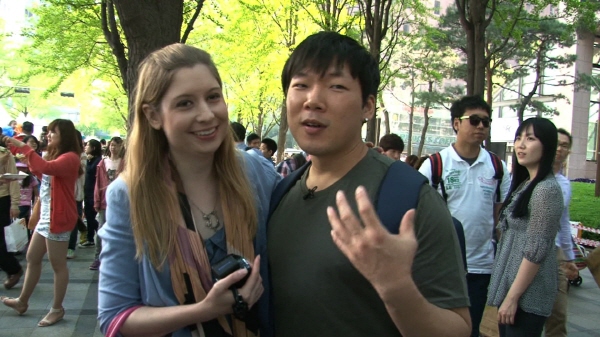
호주여자 니콜라 씨와 한국남자 순홍 씨.
순홍 씨는 유학으로 간 호주에서
니콜라 씨를 보고 첫눈에 반해, 끝없는 구애 끝에 결혼에 골인했다.
한국인 남편과 결혼 후 한국에 대한 애정이 더 커진 니콜라 씨.
한국 음식은 물론이고 음악, 역사까지 관심을 갖고 더 알고 싶어한다.
한국문화를 배우고자 한국에 대해 검색하다
Aussie girl Nichola and Korean man Soon hong
When Soon hong went to Australia to study he saw Nic and fell in love at first sight. He wooed her continuously and they finally got married.
Nic has shown affection toward Korea and is eager to learn about Korea even food, music and history and she searches about Korea since she got married.
인터넷에 ‘한국남자’에 대해 검색을 한 니콜라 씨.
한국 남자에 대해 온통 부정적인 글 밖에 없다는 사실을 알게 된다.
그것이 속상했던 니콜라 씨는 한국남자에 대한 인식을 바꿔보기로 마음먹는다.
미술을 전공을 했던 니콜라 씨가 선택한 방법은
한국인 남편과의 행복한 결혼생활을 웹툰으로 그려 블로그에 올리는 것!
그렇게 해서 시작한 ‘마이 코리안 허즈밴드’라는 제목의 웹툰은 지금
니콜라 씨와 같은 처지의 외국인 여성들에게 큰 공감과 인기를 얻고 있다.
웹툰의 인기가 날로 상승하던 중, 니콜라 씨 부부에게 걸려온 전화 한통.
한국 출판사에서 니콜라 씨의 웹툰을 책으로 내고 싶다며출판 제의가 들어온 것이다
When she searched ‘Korean men’ on internet, she realized that there were only negative postings. She felt upset so she tried to change the negative perception toward Korean men.
She did this by drawing web-toons about ‘happy marriage with Korean man’ because she majored in art, and posted them on the blog.
That’s how ‘My Korean Husband’ started and the web-toon has become popular and has gained a lot of sympathy from foreign wives like Nic.
While her web-toon has increased its popularity, Nic and Soon hong had a phone call from Korean publisher asking if they wanted to publish a book about Nic’s web-toon
부부는 벅찬 마음으로 곧장 한국 행 티켓을 끊는다.
출판 계약과 더불어 1년 만의 한국 나들이에 신이 난 니콜라 씨와 순홍 씨.
아들보다 며느리가 더 좋다는 시부모님과 흥미로운 문화가 있는 한국에서
이들 부부는 어떤 경험을 하게 될까?
그녀의 만화처럼 유쾌한 호주 새댁 니콜라 씨의 한국 방문기를 함께 해본다.
Nic and Soon hong were really excited and bought airplane tickets immediately.
They were excited to go to Korea (they haven’t been to Korea for 1 year) as well getting a contract with the publisher. What kind of experience could they have in Korea where a mother in law loves her daughter in law more than her son?
Let’s have a look at this delightful girl visiting Korea like her web toon.
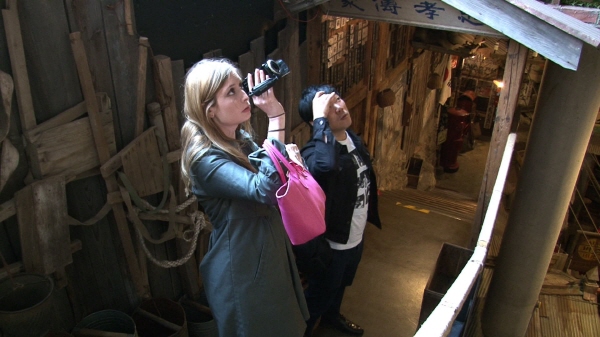
▶ 밥상에서 배우는 서로의 문화
시부모님과 함께하는 아침 식사시간.
맛있는 반찬이 가득 차려진 밥상이지만 니콜라 씨는 딸기만 집어 먹는다.
일주일에 한 번은 꼭 한국음식을 먹어야 직성이 풀리는 니콜라 씨지만,
짜고 매운 한국음식을 아침부터 먹기에는 아직 부담스럽기 때문이다.
니콜라 씨가 빵에 발라 먹기 위해 가져왔다며 꺼낸 건,
한국인에게는 맛도 이름도 생소한 호주식 잼 ‘베지마이트’
야채를 숙성해 만들어 한국의 된장처럼 짠맛이 특징이다.
니콜라가 내민 ‘베지마이트’를 시어머니가 과감하게 손가락으로 찍어 맛을 본다.
그러나 입에 넣자마자 얼굴이 구겨지는 시어머니,
Learn their culture at the breakfast table.
Having breakfast with parents in law. There are lots of delicious side dishes on the table but Nic only eats the strawberries. She has to eat Korean food at least once a week but it is a burden to eat salty and spicy Korean food in the morning.
She brings out her vege-mite (which looks like Australian jam to the Koreans) from Aussie which is unfamiliar for Koreans both in its name and its taste.
It is made of fermented vegetables and its feature is salty like Korean soy bean paste.
Nic’s mother in law tastes with her finger without hesitation but the moment she put it in the mouth her face becomes creased (screwed up).
싱크대로 달려가 입을 헹구며 한바탕 난리가 난다.
그 모습을 보고 웃음이 터진 가족들.
니콜라 씨는 자신도 한국 음식을 처음 먹었을 때,
익숙하지 않은 맛에 당황스러웠던 적이 많다며 시어머니의 반응을 이해한다.
서로의 문화가 맞지 않아도 웃으며 받아들이는 니콜라 씨 가족들.
다름을 인정하고 서로를 배려하는 그들의 가족애는 날로 깊어 간다.
She instantly runs towards the sink like headless chicken, and rinses her mouth.
They all burst in laughter.
When Nic had Korean food for the first time, she experienced embarrassment because of the unfamiliar taste of Korean food, so she understands her mother in law’s reaction.
Nic’s family is open to their different culture. They accept the difference and take care of each other, so their love of family is getting deeper.
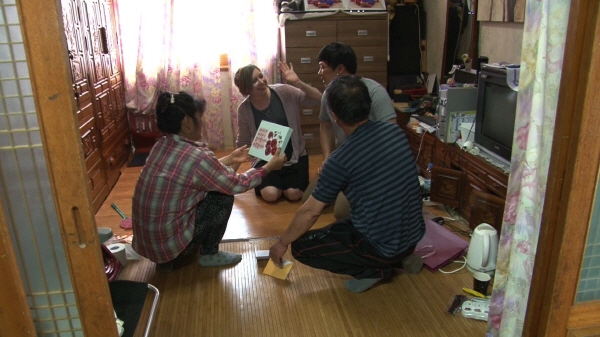
▶ 니콜라 씨 부부의 첫 번째 어버이날Nic’s and Soonhong’s the first parent day in Korea.
어머니의 날, 아버지의 날이 따로 있는 호주와 달리
부모님 두 분 모두에게 감사의 인사를 드리는 한국의 어버이날.
There is only parents day for thanking the parents, not like Australia where there is mother’s day and father’s day.
니콜라 씨는 결혼하고 처음으로 맞는 어버이날을 한국에서 보내게 되어 내심 기쁘다.
They were so happy to be in Korea, for the first parents day, since their marriage.
자신을 친자식처럼 아껴주는 시부모님의 은혜에 보답할 수 있는
절호의 기회이기 때문이다.
Because it is the best chance to pay off her parents in law, who love her like their own daughter.
어버이날 전날 밤, 남편 순홍 씨와 머리를 맞대고 고민한 끝에 결정한
선물 준비를 위해 밤늦게까지 잠을 이루지 못하는 니콜라 씨.
The night before parents day, Nic and Soonhong think over for their presents for his, so she couldn’t get to sleep until late that night.
어버이 날 당일, 니콜라 씨 부부가 이른 오전부터 인쇄소로 향한다.
On parents day, Nic and Soonhong go to a printing shop in the morning.
이들 부부가 인쇄소로 향한 건 어버이날 선물 마지막 작업을 위해서라는데….
The reason they go to the printing shop is to finish up their parents day presents.
시어머니를 울린 니콜라 씨의 깜짝 선물은 과연 무엇일까?
What would the surprise present for her mother in law be, which makes her mother in law cry?
가족 모두가 감동의 눈물을 흘리게 된 니콜라 씨의 첫 번째 어버이날 풍경을 함께한다
Let’s have a look Nic’s first parent’s day and find out what makes the family so moved.
Recent Comments